Publications
Note: publications prior to 2025 appear under Elizabeth Miller.
2026
- Santos, E. C., Friedman, S. T., & Martinez, C. M. (2026). Distinct evolutionary signatures underlie body shape diversity across deep sea habitats. Evolution, 80(1), 85–96. [PDF] [DOI] [Ohio State News] [Quirks and Quarks]
- Chan, H. W., Santos, E. C., & Evans, K. M. (2026). Integration promotes morphological innovation in deep-sea anglerfishes (Eupercaria: Lophiiformes). Evolution, 80, 2217–2229. [PDF] [DOI]
- McFarland, E. P., Medeiros, A. P. M., Pedraza-Marrón, C. D. R., Hughes, L. C., Pirro, S., Santos, E. C., Santaquiteria, A., White, W. T., Miya, M., Ortı́ Guillermo, & others. (2026). The convergent evolution of the pelvic suction cup: A unique key innovation in spiny-finned fishes. Science Advances, 12(36), eaeh7851. [PDF] [DOI]
2025
- Santaquiteria, A., Miller, E. C., Rosas-Puchuri, U., Pedraza-Marrón, C. del R., Troyer, E. M., Westneat, M. W., Carnevale, G., Arcila, D., & Betancur-R, R. (2025). Colonization Dynamics Explain the Decoupling of Species Richness and Morphological Disparity in Syngnatharian Fishes across Oceans. The American Naturalist, 205(3), E80–E99. [PDF] [DOI]
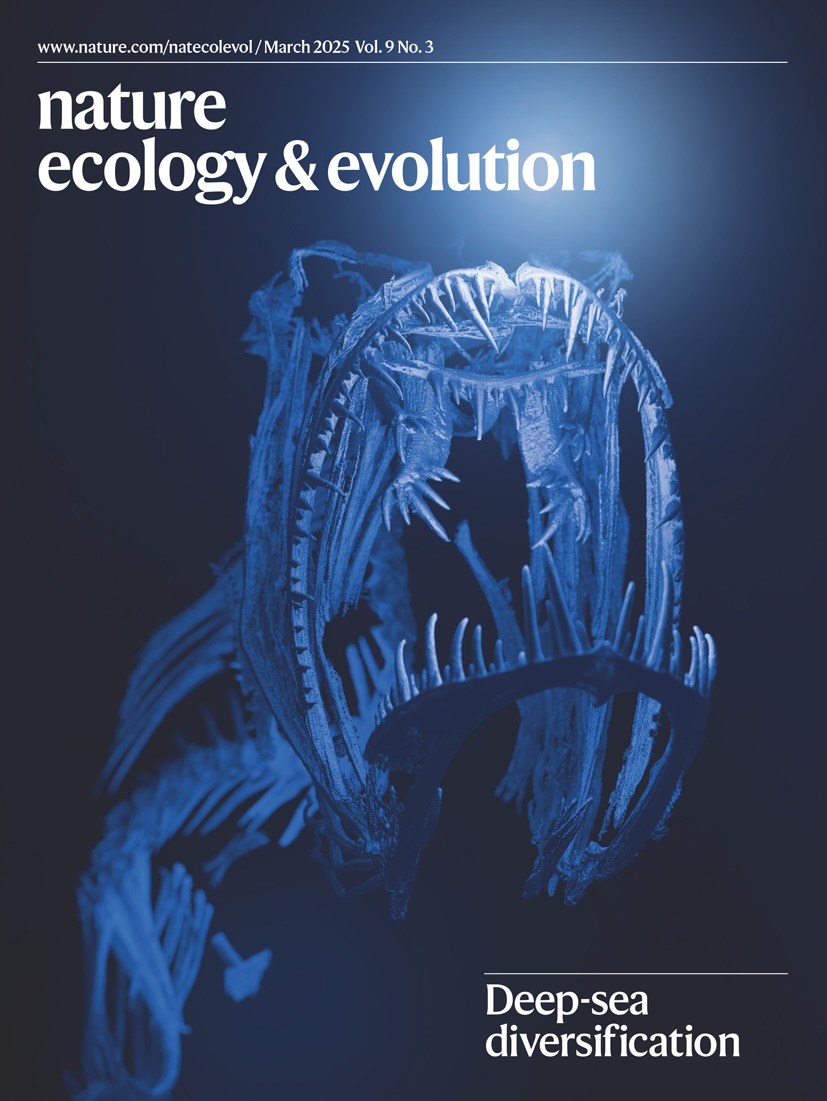
- Miller, E. C., Faucher, R., Hart, P. B., Rincón-Sandoval, M., Santaquiteria, A., White, W. T., Baldwin, C. C., Miya, M., Betancur-R, R., Tornabene, L., & others. (2025). Reduced evolutionary constraint accompanies ongoing radiation in deep-sea anglerfishes. Nature Ecology & Evolution, 9(3), 474–490. [PDF] [DOI] [Rice News] [UC San Diego Today] [Cover]
- Neves, M. P., Chan, H. W., M. Santos, E. C., & Evans, K. M. (2025). Cranial modularity drives phenotypic diversification and adaptive radiation of Antarctic icefishes. Proceedings of the National Academy of Sciences, 122(40), e2503283122. [PDF] [DOI] [Rice News]
- Gallagher, B. K., Santos, E. C., Dumelle, M., Kaufmann, P. R., & Ebersole, J. L. (2025). Geologic history explains freshwater fish species richness across the conterminous USA. Global Ecology and Biogeography, 34(10), e70139. [PDF] [DOI]
2023
- Miller, E. C. (2023). Historical biogeography supports Point Conception as the site of turnover between temperate East Pacific ichthyofaunas. Plos One, 18(9), e0291776. [PDF] [DOI]
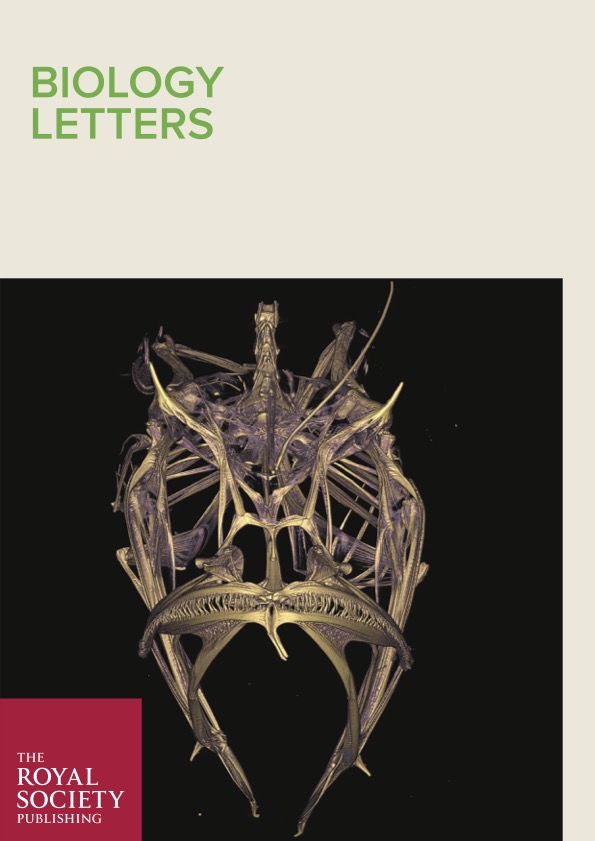
- Heiple, Z., Huie, J. M., Medeiros, A. P. M., Hart, P. B., Goatley, C. H. R., Arcila, D., & Miller, E. C. (2023). Many ways to build an angler: diversity of feeding morphologies in a deep-sea evolutionary radiation. Biology Letters, 19(6), 20230049. [PDF] [DOI] [Cover]
2022
- Miller, E. C., Martinez, C. M., Friedman, S. T., Wainwright, P. C., Price, S. A., & Tornabene, L. (2022). Alternating regimes of shallow and deep-sea diversification explain a species-richness paradox in marine fishes. Proceedings of the National Academy of Sciences, 119(43), e2123544119. [PDF] [DOI] [UW News]
2021
- Miller, E. C. (2021). Comparing diversification rates in lakes, rivers, and the sea. Evolution, 75(8), 2055–2073. [PDF] [DOI] [PNAS Inner Workings] [MinuteEarth Youtube]
- Miller, E. C., & Román-Palacios, C. (2021). Evolutionary time best explains the latitudinal diversity gradient of living freshwater fish diversity. Global Ecology and Biogeography, 30(3), 749–763. [PDF] [DOI]
- Hernández-Hernández, T., Miller, E. C., Román-Palacios, C., & Wiens, J. J. (2021). Speciation across the Tree of Life. Biological Reviews. [PDF] [DOI]
- Miller, E. C., Mesnick, S. L., & Wiens, J. J. (2021). Sexual dichromatism is decoupled from diversification over deep time in fishes. The American Naturalist, 198(2), 232–252. [PDF] [DOI]
- Barrientos, L. S., Streicher, J. W., Miller, E. C., Pie, M. R., Wiens, J. J., & Crawford, A. J. (2021). Phylogeny of terraranan frogs based on 2,665 loci and impacts of missing data on phylogenomic analyses. Systematics and Biodiversity, 19(7), 818–833. [PDF] [DOI]
2020
- Miller, E. C. (2020). Digest: Hypothesis testing in biogeography using phylogenetic trees. Evolution, 74(12), 2741–2742. [PDF] [DOI]
2019
- Wiens, J. J., Camacho Agustı́n, Goldberg, A., Jezkova, T., Kaplan, M. E., Lambert, S. M., Miller, E. C., Streicher, J. W., & Walls, R. L. (2019). Climate change, extinction, and Sky Island biogeography in a montane lizard. Molecular Ecology, 28(10), 2610–2624. [PDF] [DOI]
2018
- Streicher, J. W., Miller, E. C., Guerrero, P. C., Correa, C., Ortiz, J. C., Crawford, A. J., Pie, M. R., & Wiens, J. J. (2018). Evaluating methods for phylogenomic analyses, and a new phylogeny for a major frog clade (Hyloidea) based on 2214 loci. Molecular Phylogenetics and Evolution, 119, 128–143. [PDF] [DOI]
- Miller, E. C., & Wiens, J. J. (2018). Demystifying the marine-terrestrial biodiversity gradient: response to Vermeij et al. Ecology Letters, 21(6), 940–941. [PDF] [DOI]
- Miller, E. C., Hayashi, K. T., Song, D., & Wiens, J. J. (2018). Explaining the ocean’s richest biodiversity hotspot and global patterns of fish diversity. Proceedings of the Royal Society B: Biological Sciences, 285(1888), 20181314. [PDF] [DOI] [New York Times] [UANews]
2017
- Miller, E. C., & Wiens, J. J. (2017). Extinction and time help drive the marine-terrestrial biodiversity gradient: is the ocean a deathtrap? Ecology Letters, 20(7), 911–921. [PDF] [DOI]
- Larsen, B. B., Miller, E. C., Rhodes, M. K., & Wiens, J. J. (2017). Inordinate fondness multiplied and redistributed: the number of species on earth and the new pie of life. The Quarterly Review of Biology, 92(3), 229–265. [PDF] [DOI]
2016
- Miller, E. C., Lin, H.-C., & Hastings, P. A. (2016). Improved resolution and a novel phylogeny for the Neotropical triplefin blennies (Teleostei: Tripterygiidae). Molecular Phylogenetics and Evolution, 96, 70–78. [PDF] [DOI]
2013
- Rosenblatt, R. H., Miller, E. C., & Hastings, P. A. (2013). Three new species of triplefin blennies of the genus Enneanectes (Teleostei, Tripterygiidae) from the tropical eastern Pacific with a key to Pacific species of Enneanectes. Zootaxa, 3636(2), 361–373. [PDF] [DOI]